Mathematics
Physics
© The scientific sentence. 2010
|
CYLINDRICAL COORDINATES
1.The expressions of the components of a vector:
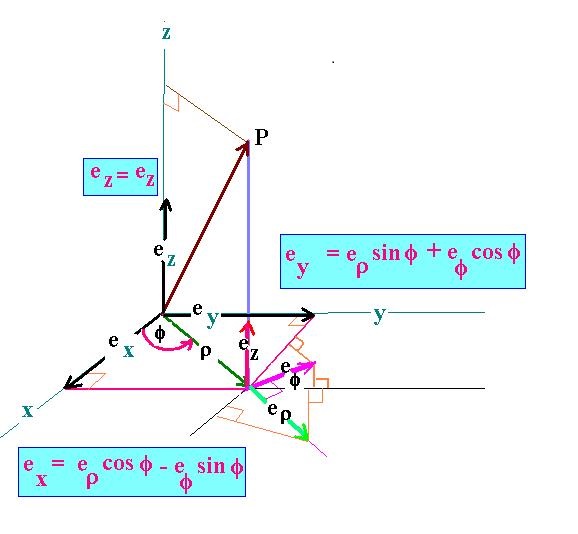
In this system, we have:
P = (Px , Py, Pz), or:
P = Pxex + Pyey + Pzez
Where:
eρ, eφ and ez are the vector unit in this system; that is
they are perpendicular to each other and their magnitude is equal to 1.
Remark that that ez stays the same over the z axis.
But for eρ and eφ, we do the following
calculations:
They are in the same plan (yx). Their projections over y and x axis give
the vector unit over y and x:
- Over y : eρ sin φ + eφ cos φ = ey (1)
- Over x : eρ cos φ - eφ sin φ = ex (2)
- Over z : ez = ez (3)
P can be written as:
P = Px[eρ cos φ - eφ sin φ] + Py[eρ sin φ + eφ cos φ] + Pz[ez]
P = [Pxcos φ + Py sin φ]eρ + [- Px sin φ + Pycos φ]eφ + Pz[ez]
= Pρeρ + Pφeφ + Pzez
2. Unit vectors transformations:
The related transformation (eρ, eφ, ez) → (eρ, eφ, ez)
can be obtained by writing:
[Pρ, Pφ, Pz] = MATRIX [Px, Py, Pz] and
therfore inverse the matrix MATRIX to get the coordinates of P
in (x, y, z) system from(ρ, φ, z) system.
Where:
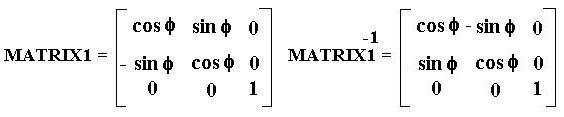
We can obtain these transformations just by:
- Multiplying (1) by cosφ
eρ sin φcosφ + eφcos φ = cosφey (4)
- Multiplying (2) by sinφ
eρcos φsinφ - eφ sin φ2 = sinφex (5)
(4) - (5) gives:
eφ = cosφey - sinφex
- Multiplying (2) by cosφ
eρ cos φ2 - eφ sin φcosφ = excosφ (6)
- Multiplying (1) by sinφ
eρ sin φ2 + eφcos φsinφ = eysinφ (7)
(6) + (7) gives:
eρ = excosφ + eysinφ
Then:
eρ = cosφex + sinφey
eφ = cosφey - sinφex
ez = ez
3.The Gradiant:
V(x,y,z) : any vector.
x = ρ cosφ
y = ρ sinφ
z = z
The inverse transformation is:
ρ = [x2 + y2]1/2
φ = tg-1(x/y) = arctg (x/y)
We use the relationships:
tg φ = y/x
1 + tg2φ = 1/cos2φ
The variable x depends on ρ and φ. It follows that:
∂/∂x = (∂/∂ρ)(∂ρ/∂x) + (∂/∂φ)(∂φ/∂x)
Then:
∂ρ/∂x = (1/2) [x2 + y2] - 1/2 . 2.x = x/ρ = cos φ
∂φ/∂x = ?
First:
∂(tgφ)/∂x = [∂(tgφ)/∂φ] φ/∂x = [1 + tg2φ] ∂φ/∂x
= ∂(y/x)/∂x = - y/x2 = - tg φ/ρcos φ
Then: φ/∂x = cos2φ[- tg φ/ρcos φ]= - sin φ/ρ
Then:
∂/∂x = (∂/ρ)(cos φ) + (∂/φ)(- sin φ/ρ)
∂/∂x = cos φ ∂/∂ρ - sinφ/ρ ∂/∂φ
∂/∂y = (∂/∂ρ)(∂ρ/∂y) + (∂/φ)(∂φ/∂y)
∂ρ/∂y = (1/2) [x2 + y2] - 1/2 . 2.y = y/ρ = sin φ
∂φ/∂y = cos2φ[∂(tg φ)/∂y ]= (1/x) cos2φ = cos φ/ρ
Then:
∂/∂y = (∂/∂ρ)( sin φ) + (∂/∂φ)(cos φ/ρ)
∂/∂y = sinφ ∂/∂ρ + cos φ/ρ ∂/∂φ
To recap:
∂/∂x = cos φ ∂/∂ρ - sinφ/ρ ∂/∂φ
∂/∂y = sinφ ∂/ρ + cos φ/∂ρ ∂/∂φ
∂/∂z = ∂/∂z
From the above figure, we have:
ex = eρ cos φ - eφ sin φ
ey = eρ sin φ + eφ cos φ
ez = ez
Then:
∇ = ∂/∂x ex + ∂/∂y ey
+ ∂/∂z ez=
[cos φ ∂/∂ρ - sinφ/ρ ∂/∂φ][eρ cos φ - eφ sin φ] +
[sinφ ∂/∂ρ + cos φ/ρ ∂/∂φ][eρ sin φ + eφ cos φ ]
+ [ ∂/∂z][ez] =
cos φ ∂/∂ρeρ cos φ - sinφ/ρ ∂/∂φeρ cos φ - eφ sin φcos φ ∂/ρ +
eφ sin φsinφ/ρ ∂/∂φ +
sinφ ∂/ρeρ sin φ +
cos φ/ρ ∂/∂φeρ sin φ + sinφ ∂/ρ eφ cos φ +
cos φ/ρ ∂/∂φ eφ cos φ + ∂/∂z ez
= ∂/∂ρ eρ + (1/ρ) ∂/∂φ eφ + ∂/∂z ez
∇ = ∂/∂ρ eρ + (1/ρ) ∂/∂φ eφ + ∂/∂z ez
4.The Laplacien:
∂2/∂x2 = [(∂ρ/∂x)(∂/∂ρ) + (∂φ/∂x)(∂/∂φ)] (∂/∂x)
(∂/∂ρ) (∂/∂x) = cosφ ∂2/∂ρ2 + (sinφ/ρ2) ∂/∂φ
(∂/∂φ) (∂/∂x) = - (sinφ) ∂/∂ρ - (cosφ/ρ)∂/∂φ - (sinφ/ρ) ∂2/∂φ2
Then:
∂2/∂x2 = (sin2φ/ρ) ∂/∂ρ + 2( cosφsinφ/ρ2) ∂/∂φ + (cos2φ) ∂2/∂ρ2 + (sin2φ/ρ2) ∂2/∂φ2
∂2/∂y2 = [(∂ρ/∂y)(∂/∂ρ) + (∂φ/∂y)(∂/∂φ)] (∂/∂y)
(∂/∂ρ) (∂/∂y) = sinφ ∂2/∂ρ2 - (cosφ/ρ2) ∂/∂φ
(∂/∂φ) (∂/∂y) = (cosφ) ∂/∂ρ - (sinφ/ρ)∂/∂φ +(cosφ/ρ) ∂2/∂φ2
Then:
∂2/∂y2 = (cos2φ/ρ) ∂/∂ρ - 2( cosφsinφ/ρ2) ∂/∂φ + (sin2φ) ∂2/∂ρ2 + (cos2φ/ρ2) ∂2/∂φ2
∂2/∂z2 = ∂2/∂z2
It follows that:
Δ = (1/ρ) ∂/∂ρ + ∂2/∂ρ2 + (1/ρ2) ∂2/∂φ2 + ∂2/∂z2
5.The volume element:
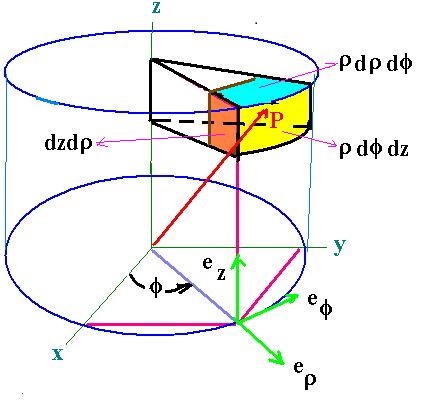
The volume element is:
dV = ρdρdφdz
The surface elements are:
ρdφdz eρ
dρdφdz eφ
ρdρdφ ez
6. The divergence of a vector: ∇ . A
We know that:
∇ = ∂/∂ρ eρ + (1/ρ) ∂/∂φ eφ + ∂/∂z ez
And:
eρ = cosφ ex + sinφ ey
eφ = - sinφ ex + cosφ ey
ez = ez
Let A = (Aρ, Aφ, Az)
∇ . A =
[∂/∂ρ eρ + (1/ρ) ∂/∂φ eφ + ∂/∂z ez] . [Aρ eρ + Aφ eφ + Az ez] =
∂Aρ/∂ρ eρ . eρ + (1/ρ) ∂Aρ/∂φ eφ . eρ + ∂Aρ/∂z ez . eρ +
Aρ eρ . ∂eρ/∂ρ + (1/ρ)Aρ eφ . ∂eρ/∂φ + Aρ ez . ∂eρ/∂z
+
∂Aφ/∂ρ eρ . eφ + (1/ρ) ∂Aφ/∂φ eφ . eφ + ∂Aφ/∂z ez . eφ +
Aφ eρ . ∂eφ/∂ρ + (1/ρ) Aφ eφ . ∂eφ/∂φ + Aφ ez . ∂eφ/∂z ]
+
∂Az/∂ρ eρ . ez + (1/ρ) ∂Az/∂φ eφ . ez + ∂Az/∂z ez . ez +
Aρ eρ . ∂ez/∂ρ + (1/ρ)Az eφ . ∂ez/∂φ + Az ez . ∂ez/∂z
We will use:
∂eρ/∂ρ = 0
∂eρ/∂φ = eφ
∂eρ/∂z = 0
∂eφ/∂ρ = 0
∂eφ/∂φ = - eρ
∂eφ/∂z = 0
∂ez/∂ρ = 0
∂ez/∂φ = 0
∂ez/∂z = 0
Then:
∇ . A =
∂Aρ/∂ρ + 0 + 0 +
0 + (1/ρ)Aρ + 0
+
0 + (1/ρ) ∂Aφ/∂φ + 0 +
0 + 0 + 0]
+
0 + 0 + ∂Az/∂z +
0 + 0 + 0
We find then:
∇ . A = ∂Aρ/∂ρ + (1/ρ)Aρ + (1/ρ) ∂Aφ/∂φ + ∂Az/∂z
Or:
∇ . A = (1/ρ)∂(ρ Aρ)/∂ρ + (1/ρ) ∂Aφ/∂φ + ∂Az/∂z
7. The curl of a vector: ∇ x A
We know that:
∇ = ∂/∂ρ eρ + (1/ρ) ∂/∂φ eφ + ∂/∂z ez
And:
eρ = cosφ ex + sinφ ey
eφ = - sinφ ex + cosφ ey
ez = ez
Let A = (Aρ, Aφ, Az)
∇ x A =
[∂/∂ρ eρ + (1/ρ) ∂/∂φ eφ + ∂/∂z ez] x [Aρ eρ + Aφ eφ + Az ez] =
∂Aρ/∂ρ eρ x eρ + (1/ρ) ∂Aρ/∂φ eφ x eρ + ∂Aρ/∂z ez x eρ +
Aρ eρ x ∂eρ/∂ρ + (1/ρ)Aρ eφ x ∂eρ/∂φ + Aρ ez x ∂eρ/∂z
+
∂Aφ/∂ρ eρ x eφ + (1/ρ) ∂Aφ/∂φ eφ x eφ + ∂Aφ/∂z ez x eφ +
Aφ eρ x ∂eφ/∂ρ + (1/ρ) Aφ eφ x ∂eφ/∂φ + Aφ ez x ∂eφ/∂z
+
∂Az/∂ρ eρ x ez + (1/ρ) ∂Az/∂φ eφ x ez + ∂Az/∂z ez x ez +
Aρ eρ x ∂ez/∂ρ + (1/ρ)Az eφ x ∂ez/∂φ + Az ez x ∂ez/∂z
We will use:
eρ x eρ = 0
eφ x eφ = 0
ez x ez = 0
eρ x eφ = ez
eφ x ez = eρ
ez x eρ = eφ
∂eρ/∂ρ = 0
∂eρ/∂φ = eφ
∂eρ/∂z = 0
∂eφ/∂ρ = 0
∂eφ/∂φ = - eρ
∂eφ/∂z = 0
∂ez/∂ρ = 0
∂ez/∂φ = 0
∂ez/∂z = 0
Then:
∇ x A =
0 - (1/ρ) ∂Aρ/∂φ ez + ∂Aρ/∂z eφ +
0 + 0 + 0
+
∂Aφ/∂ρ ez + 0 - ∂Aφ/∂z eρ +
0 + (1/ρ) Aφ ez + 0
+
- ∂Az/∂ρ eφ + (1/ρ) ∂Az/∂φ eρ + 0 +
0 + 0 + 0
=
- (1/ρ) ∂Aρ/∂φ ez + ∂Aρ/∂z eφ + ∂Aφ/∂ρ ez - ∂Aφ/∂z eρ +
(1/ρ) Aφ ez - ∂Az/∂ρ eφ + (1/ρ) ∂Az/∂φ eρ
= [(1/ρ) ∂Az/∂φ - ∂Aφ/∂z]eρ
+ [∂Aρ/∂z - ∂Az/∂ρ ]eφ
+ [(1/ρ) Aφ + ∂Aφ/∂ρ - (1/ρ) ∂Aρ/∂φ] ez
We get then:
∇ x A =
[(1/ρ) ∂Az/∂φ - ∂Aφ/∂z] eρ + [∂Aρ/∂z - ∂Az/∂ρ ] eφ + (1/ρ)[ Aφ +
ρ ∂Aφ/∂ρ - ∂Aρ/∂φ] ez
Or:
∇ x A =
[(1/ρ) ∂Az/∂φ - ∂Aφ/∂z] eρ +
[∂Aρ/∂z - ∂Az/∂ρ ] eφ +
(1/ρ)[ ∂(ρ Aφ)/∂ρ - ∂Aρ/∂φ] ez
|
|